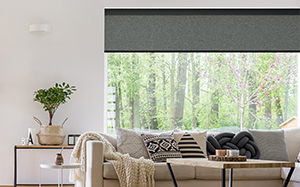
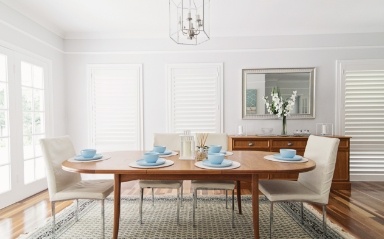

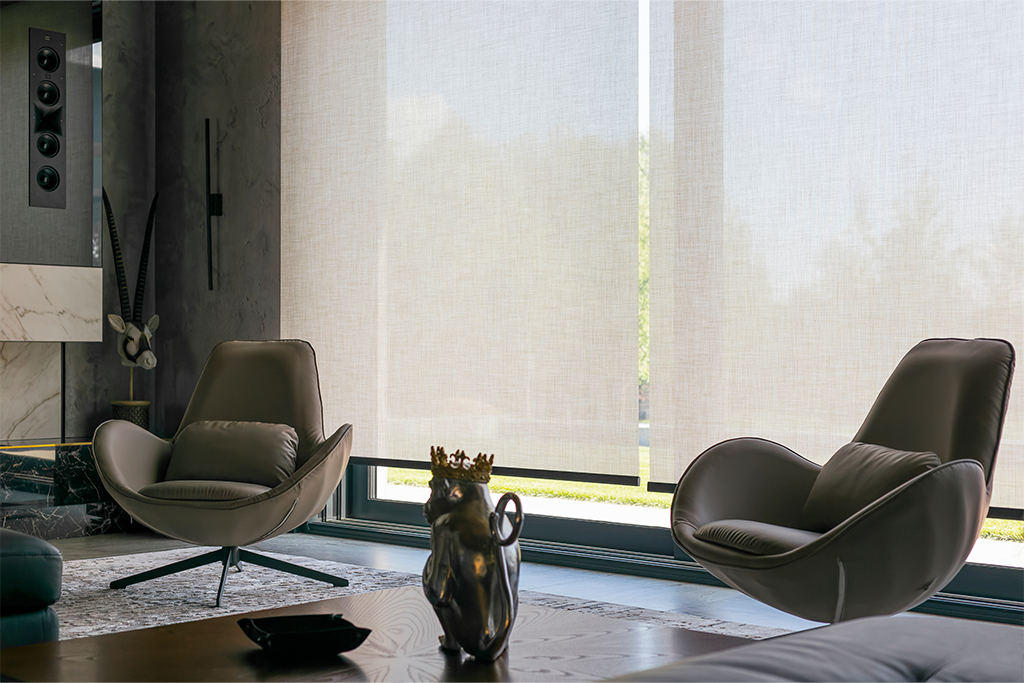
Dining room blinds are window coverings designed to control sunlight, cut table glare, and add privacy, without making the room feel closed in. In Australian homes, almost 90% of heat gain and up to 40% of heat loss can occur through windows, so the right blind can also help the space feel more comfortable across the day.
Most dining rooms face the same pain points. Afternoon sun can hit the table and make the room feel harsh. At night, street-facing windows can feel exposed. People also want something that is easy to clean, does not show marks quickly, and works properly on large windows or sliding doors.
In this guide, you will find 8 dining room blind ideas and a simple way to choose based on your window type, your light problem, and your privacy needs. You will also see which options suit daytime glare, which suit night privacy, and which suit wide openings.
How to Choose Dining Room Blinds
- Choose blinds that match your main need for glare control, privacy, or both.
- Match the blind style to your window type, including sliding doors and bays.
- Pick a design that gives the level of light control you want each day.
- Check how the fabric performs in daylight and at night with indoor lights.
- Choose materials that are easy to clean and suit a dining space near food.
- Decide on inside fit or outside fit based on your frame depth and gaps.
- Keep the color practical for daily use and consistent with the room style.
8 Best Dining Room Blind Options (Quick Picks)
Dining room blinds help reduce glare on the table, manage harsh afternoon sun, and improve privacy after dark. Here are eight blind options, starting with All Shutters and Blinds, with one clear reason to choose each.
- Motorised Blinds: One touch control to reduce table glare fast and increase privacy after dark.
- Zipscreen Outdoor Blinds: Screen outdoor openings to block low sun glare and limit views into dining areas.
- Panel Glide Blinds: Smooth sliding panels for wide windows and doors, with neat stacking and full coverage.
- Roman Blinds: Soft fabric folds that filter daylight, reduce harsh light, and suit styled dining spaces.
- Venetian Blinds: Tilt slats to direct sunlight away from eyes while keeping privacy through the day.
- Double Roller Blinds: Two layers (sunscreen and blockout) so you can cut glare by day and get strong privacy at night.
- Vertical Blinds: Rotating vanes for large openings that adjust light control and privacy without heavy fabrics.
- Sheer Vision Blinds: Layered bands that align to filter light or close for stronger privacy when needed.
Comparison of Top 8 Dining Room Blinds
| Blind type | Best for in dining rooms | Day privacy | Night privacy | Light control style |
| Motorised Blinds | Fast daily adjustment for glare and privacy | Medium to High | High with blockout | Raise or lower quickly |
| Zipscreen Outdoor Blinds | Patio doors and alfresco openings near dining | High | Medium | Filter and screen glare |
| Panel Glide Blinds | Wide windows and sliding doors | Medium | Medium to High | Slide panels across |
| Roman Blinds | Soft style for formal dining rooms | Medium | Medium to High | Raise in folds |
| Venetian Blinds | Precise control without blocking airflow | Medium | Medium | Tilt slats for angles |
| Double Roller Blinds | Day glare control plus strong night privacy in one neat system | Medium to High | High | Switch layers for day vs night |
| Vertical Blinds | Large spans that need flexibility | Medium | Medium | Rotate and draw aside |
| Sheer Vision Blinds | Filtered light with adjustable privacy | Medium to High | Medium | Align bands to open or close |
1. Motorised Blinds
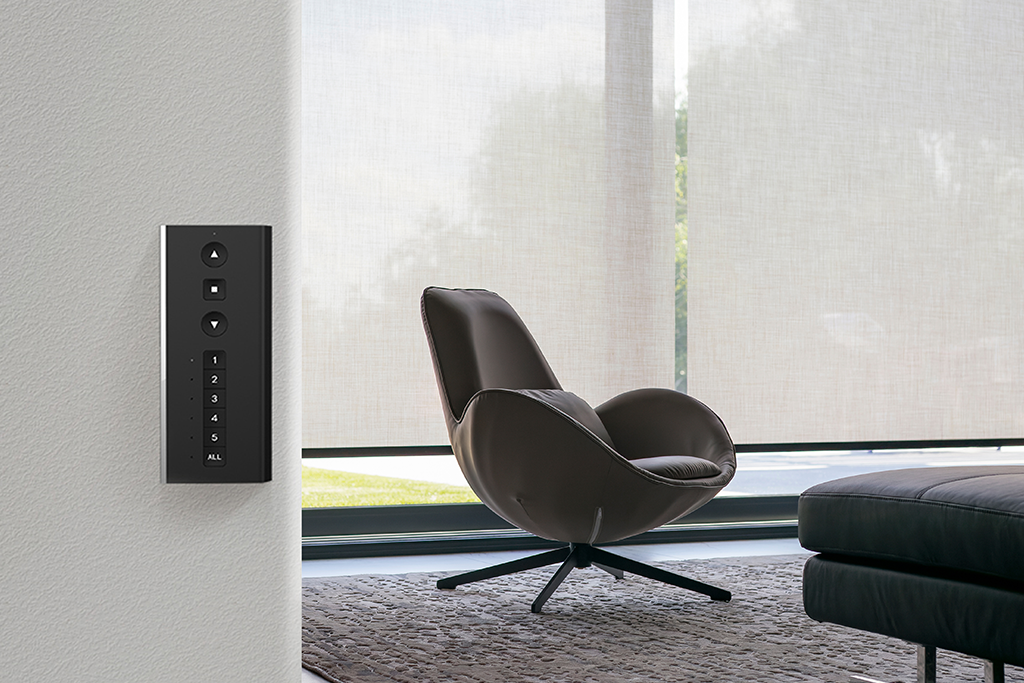
Motorized blinds suit dining rooms where sunlight shifts across the table through the day. Adjustments feel effortless when you are serving food, setting plates, or hosting guests. Glare control becomes a quick change instead of a constant irritation.
In open-plan homes, the dining area often doubles as a workspace or family zone. A Motorized blind lets you lower for privacy after dark, then lift to bring daylight back in. The finish stays clean and uncluttered, even on larger windows.
Best for
Dining rooms that need fast glare control and easy night privacy.
Why it works in a dining room
Quick changes suit meal times, entertaining, and changing sun angles.
What to look for
Select a fabric that matches your goal, such as sunscreen for daytime glare or blockout for night privacy. Confirm the blind can stop at any height to block table level glare. Choose a control option that fits daily use, especially for hard to reach windows.
2. Zipscreen Outdoor Blinds
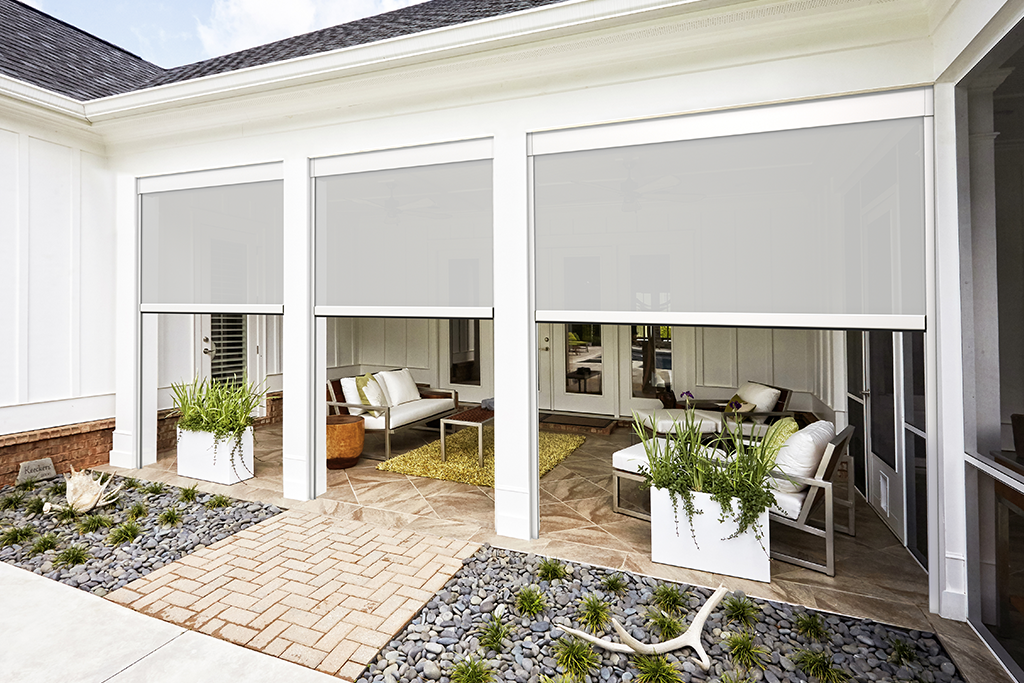
Zipscreen outdoor blinds work well when the dining room sits beside an alfresco opening or large doors. The screen reduces harsh light and softens the view into the room. This can make meals feel more private This can make meals feel more private when the space faces neighbors or a public walkway.
Airflow can still matter in dining spaces that open outdoors, especially in warmer months. A screen style blind helps keep the opening feeling open while cutting glare. The result is a more usable indoor to outdoor dining connection.
Best for
Dining rooms near patio doors that need privacy and glare control.
Why it works in a dining room
It screens sunlight and sightlines while keeping the opening feeling open.
What to look for
Pick a screen fabric that reduces glare while still allowing visibility and airflow. Check how the system behaves in breezy conditions and how it seals along the sides. Confirm clearance around door handles and make sure pathways stay unobstructed.
3. Panel Glide Blinds
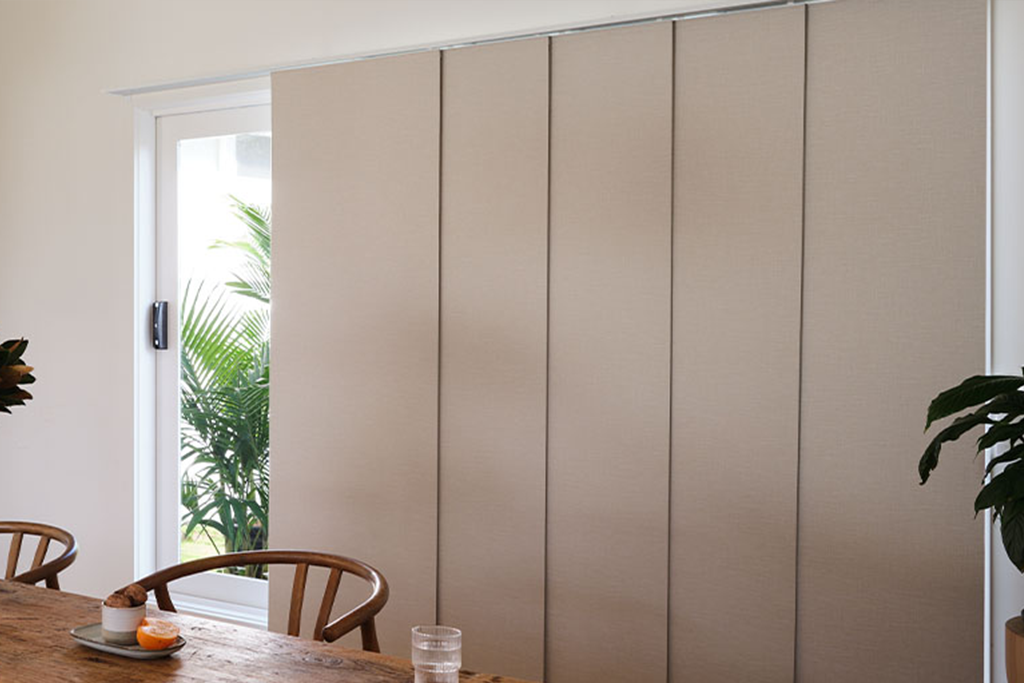
Panel glide blinds suit dining rooms with wide glass and sliding doors. Large panels move across the opening in a straight line, so coverage stays neat from end to end. This is useful when you want privacy across a big span without multiple separate blinds.
Traffic flow matters near dining doors, especially when guests move in and out. Stacking panels to one side keeps access clear and avoids clutter around the doorway. Light control stays simple, and the look remains modern and tidy.
Best for
Wide dining windows and sliding doors that need neat full coverage.
Why it works in a dining room
Panels slide smoothly and stack away, so doors remain easy to use.
What to look for
Measure the stack depth so you know how much opening remains when the panels are fully open. Choose light filtering for daytime softness or blockout for stronger privacy. Place the track to avoid contact with frames, handles, and door hardware.
4. Roman Blinds
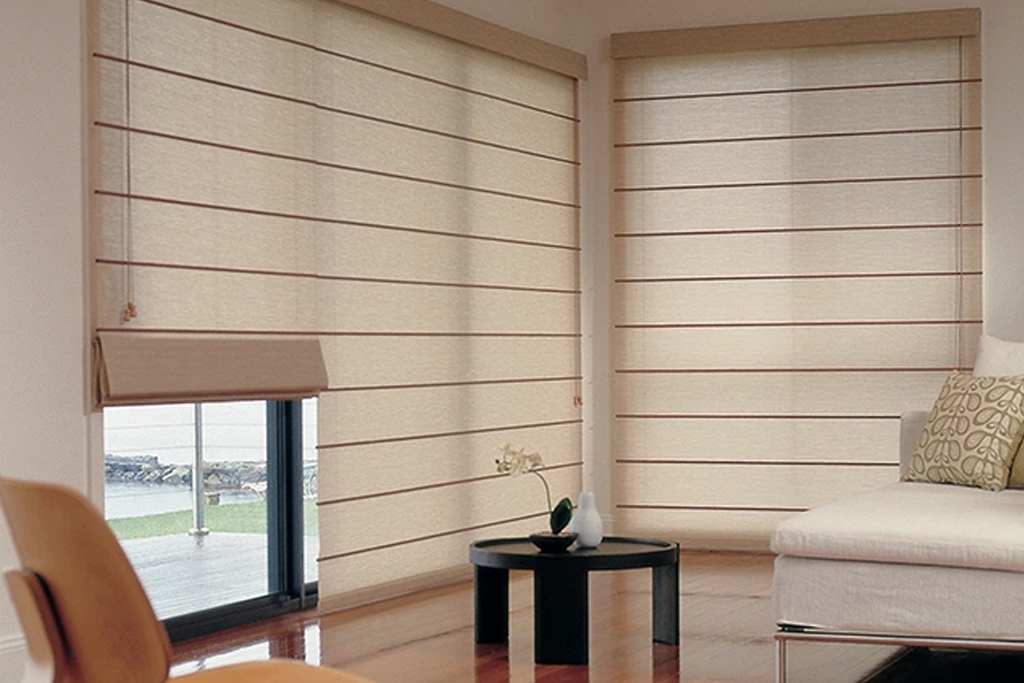
Roman blinds are a strong choice when you want dining room light control with a softer finish. Fabric folds add warmth and texture, which can elevate a plain wall of glass. The window feels styled, not purely functional.
Brightness can be managed without making the room feel dark. Raise the blind to keep the view and drop it to reduce glare on the table. With the right lining, privacy improves while the room still feels welcoming.
Best for
Dining rooms that want soft styling and controlled daylight.
Why it works in a dining room
Fabric folds soften glare and add warmth without feeling heavy.
What to look for
Choose a fabric that cleans easily if the dining area sits near the kitchen. Check the stack height so raised folds do not block too much glass. If night privacy matters, add a lining that improves coverage.
5. Venetian Blinds
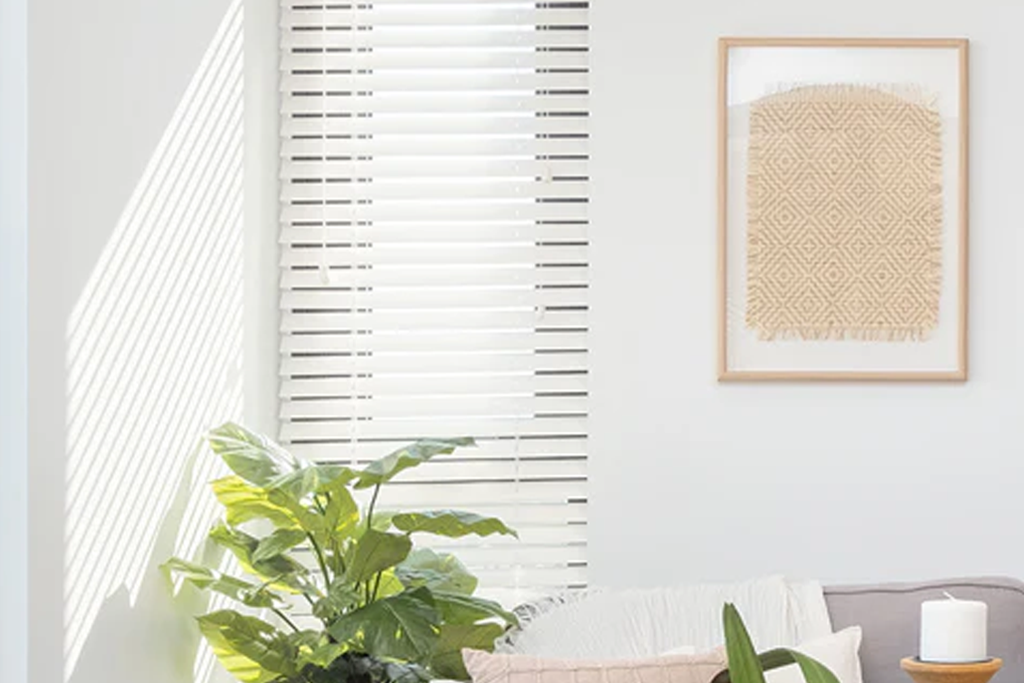
Venetian blinds perform well when sunlight hits the dining table at a sharp angle. Tilting the slats lets you redirect light upward or downward while keeping daylight in the room. That level of control is hard to match with a simple raise and lower blind.
Privacy can be adjusted throughout the day without fully closing the window. Angle the slats to limit views inside while still keeping the room bright. This suits street-facing dining rooms and homes with close neighbors.
Best for
Dining rooms that need precise light angles and flexible privacy.
Why it works in a dining room
Slat tilt manages glare and privacy while keeping the room bright.
What to look for
Match slat width to the window size and the look you want. Pick finishes that wipe clean for a dining setting. Confirm the tilt mechanism feels smooth and the blind can lift fully for an open view.
6. Double Roller Blinds
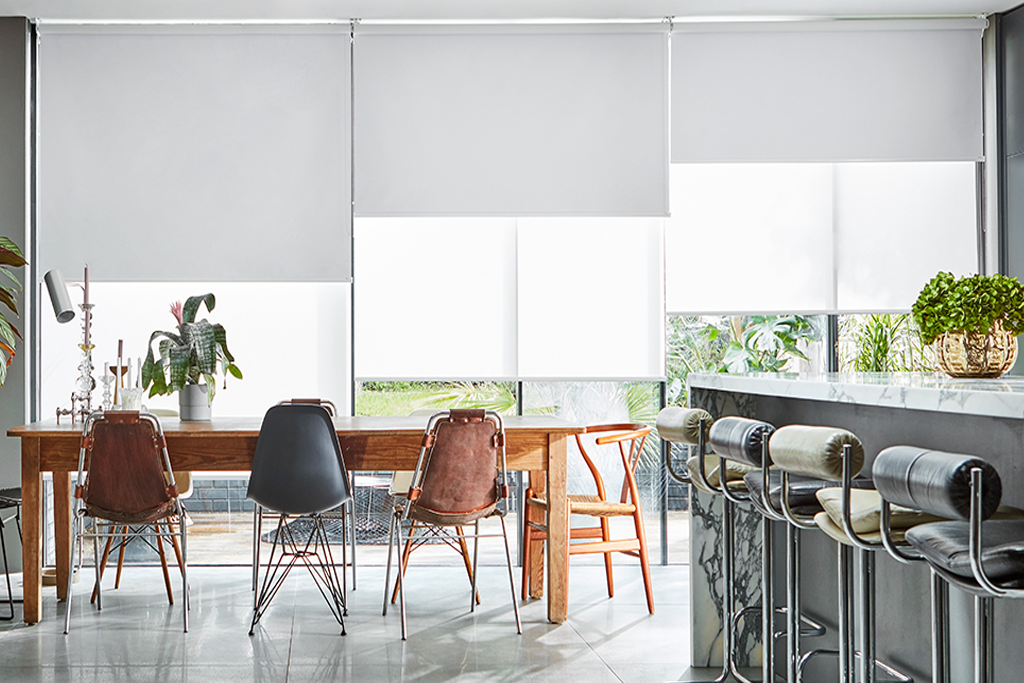
Double roller blinds are one of the most practical dining room solutions because they solve the real problem most homes have: you want glare control in the daytime, but you also want privacy at night. A sunscreen layer helps cut harsh light on the table while keeping the room bright. A blockout layer gives stronger privacy once indoor lights are on.
This setup is also a clean fit for open-plan dining spaces. You can keep the sunscreen down during the day for comfortable meals and lower the blockout later for privacy, without adding extra rods or bulky window treatments.
Best for
Dining rooms that need daytime glare control and dependable night privacy.
Why it works in a dining room
Two layers give you the right fabric for the right time of day, without changing the whole look.
What to look for
Choose a sunscreen openness that balances view and glare reduction. Confirm the blockout layer is truly blockout and sized to minimize side gaps. Ask about pelmets or fascias if you want a cleaner finish and better light control. For sliding doors, confirm the bracket position clears handles and does not interfere with the walkway.
7. Vertical Blinds
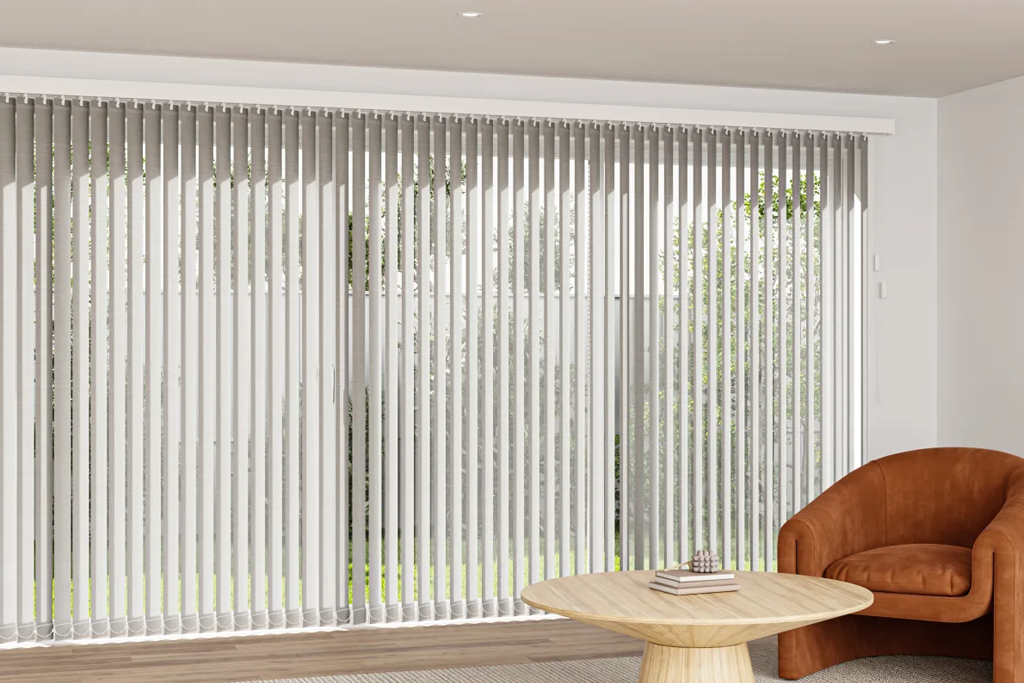
Vertical blinds suit dining rooms with wide windows or doors used throughout the day. The vanes rotate to adjust light and privacy, then draw aside for access. This works well when people move between the dining area and the outside space.
Large spans can be covered without heavy fabrics or multiple separate blinds. Angling the vanes can reduce glare on the table while still allowing daylight in. For practical, high use openings, this option stays straightforward and effective.
Best for
Wide openings that need easy access and adjustable privacy.
Why it works in a dining room
Vanes rotate for glare control and draw aside for clear door access.
What to look for
Choose vane materials that hold shape and wipe clean easily. Set the stacking side to keep the main walkway clear. Check the track runs smoothly and clears frames, handles, and locks.
8. Sheer Vision Blinds
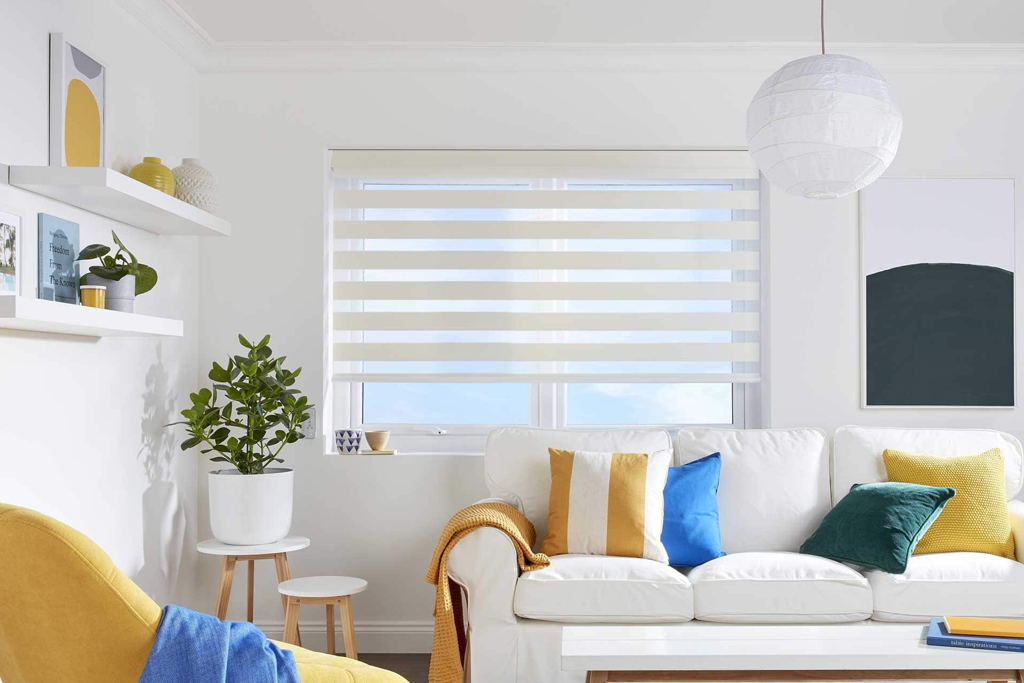
Sheer vision blinds suit dining rooms where you want filtered light with adjustable privacy. Layered bands shift to change how much light enters, so the room stays bright without harsh glare. This is helpful in dining spaces that get strong afternoon sun.
Privacy needs often change once indoor lights turn on. Aligning the bands increases coverage and reduces visibility into the room. The look is modern, and control feels flexible without adding a second blind.
Best for
Dining rooms that want filtered light with flexible privacy control.
Why it works in a dining room
Layered bands adjust light and privacy with a simple shift.
What to look for
Choose band spacing that gives the privacy you want when closed. View samples in both daylight and evening lighting to confirm the effect. If night privacy is critical, pair with a separate blockout option or choose a more private fabric style.
Dining Room Tips that Make Blinds Work Better
- Choose lighter colours to keep the dining room feeling open and bright.
- Pick wipeable finishes if the dining area sits close to the kitchen.
- If you host often, choose blinds that adjust quickly without fuss.
- For sliding doors, prioritise smooth stacking and handle clearance.
- Use daytime filtering to reduce glare while keeping natural light.
- Choose a close-fitting style if night privacy is a priority.
Common Mistakes to Avoid with Dining Room Blinds
Most dining room blind issues come down to a mismatch between the blind style and how the room is used. Glare, privacy, and daily wear can be easy to manage when you choose the right material, fit, and operating style for your windows.
- Choosing light-filtering blinds when you need strong night privacy.
- Ignoring side gaps on roller blinds, which can leak light and reduce privacy.
- Picking fabrics that stain easily or are hard to wipe clean near food.
- Using the wrong blind style for sliding doors can cause snagging or poor clearance.
- Installing blinds too low, so they interfere with chairs, benches, or door handles.
- Choosing very dark colours in small dining rooms, which can make the space feel heavy.
If you want help choosing the right option, All Shutters and Blinds can recommend the best style for your window type and dining room use.
FAQs
1. What blinds are best for dining room privacy at night?
Blockout roller blinds and double roller blinds are strong options for night privacy. A close fit also helps reduce side gaps that can let light and views through.
2. What blinds reduce glare on the dining table?
Sunscreen roller blinds, Venetian blinds, and double roller blinds can reduce harsh glare. They help soften light while still keeping the room bright.
3. Are sunscreen blinds private at night?
Sunscreen fabrics usually give better privacy during the day. At night, indoor lights can make the room more visible from outside, so a blockout layer is often needed.
4. What blinds suit sliding doors in a dining room?
Panel glide blinds and vertical blinds work well on sliding doors because they stack to the side. They also keep access clear when people move in and out during meals.
5. What blinds are easiest to clean in a dining room?
Venetian blinds and many roller blind fabrics are practical for wipe-downs. If the dining area sits near the kitchen, choose finishes that handle fingerprints and splashes.
6. Should dining room blinds be inside fit or outside fit?
Inside fit gives a neater look when the window has enough depth. Outside fit can reduce light gaps and improve privacy, especially for roller blinds.
7. How do I choose blind colour for a dining room?
Lighter colours keep the space feeling open and help soften strong daylight. Mid-tones can hide marks better in high-use dining areas and still look clean.