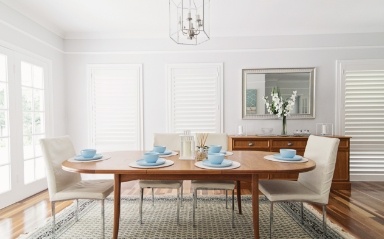

Plantation shutters are fixed window shutters with wide adjustable louvres that let you control light, airflow, and privacy. In Australia, that matters because heating and cooling can account for around 20 to 50% of household energy use depending on your climate zone.
Most people consider shutters for more privacy without losing daylight, less glare on screens, and a clean built-in look. Common concerns are cost, the right material for bathrooms and kitchens, and whether they will help with heat and strong sun.
Below, we cover the top 8 reasons to choose plantation shutters so you can decide what suits your home.
The 8 Best Reasons to Choose Plantation Shutters
Plantation shutters give you simple, practical control over light, privacy, and airflow. They also add a clean built-in finish that suits many Australian homes. Here is the quick list of the 8 reasons:
- Light Control and Privacy Together
- Better Airflow When you Want it
- Less Heat and Screen Glare
- Added Insulation for Winter
- No Cords
- Easy to Clean and Maintain
- Strong and Long Lasting
- Better Home Appeal
1) Light Control and Privacy Together
Plantation shutters let you tilt the louvres to bring in natural light while keeping views from outside blocked. This is ideal for street facing windows, bathrooms, and rooms where you want daylight without feeling exposed. You can also fully close them when you want maximum privacy.
2) Better Airflow When you Want it
Tilt the louvres to bring in a breeze while keeping the room shaded and private. You can angle airflow up or down instead of fully opening the window covering. It’s useful in bedrooms and living rooms when you want ventilation without glare.
3) Less Heat and Screen Glare
In summer, sun hitting glass can quickly heat a room and create harsh glare. Shutters help by blocking direct sunlight and letting you angle the louvres to soften light. This makes them practical for west facing windows and rooms with TVs, laptops, or home office setups.
4) Added Insulation for Winter
Shutters add another layer between your room and the window, which can help reduce drafts and heat loss when closed. The key is a good fit with minimal gaps around the frame. If comfort is your goal, professional measuring matters as much as the shutter itself.
5) No Cords
Shutters are operated by hand, so there are no hanging cords at the window. This keeps the space looking cleaner and avoids the common tangles you get with corded blinds. It is also a practical choice for homes that prefer cord-free window coverings.
6) Easy to Clean and Maintain
Most shutters only need regular dusting and an occasional wipe with a damp cloth. Unlike fabric curtains, you are not dealing with washing, drying, and rehanging. This is a big plus for kitchens and areas that collect dust quickly.
7) Strong and Long Lasting
Plantation shutters are a fixed, rigid window covering, so they are less likely to sag or fray like fabric options. They last best when the material matches the room (PVC for wet areas), and the shutters are installed square with a tight fit so louvres stay aligned and operate smoothly.
8) Better Home Appeal
Plantation shutters look like a built-in window feature, not a temporary add-on. They keep windows looking clean inside, and from the street they give front-facing windows a uniform, tidy finish that suits both modern and classic Australian homes.
Best Places to Use Plantation Shutters
- Street facing windows: keep privacy while still letting in daylight
- Living rooms: reduce TV glare and manage afternoon sun
- Bedrooms: darker when closed, gentle light when louvres are tilted
- Home offices: cut screen glare and keep light steady through the day
- Kitchens: easy wipe down and better than fabric near cooking areas
- Bathrooms and laundries: strong privacy with moisture safe materials like PVC
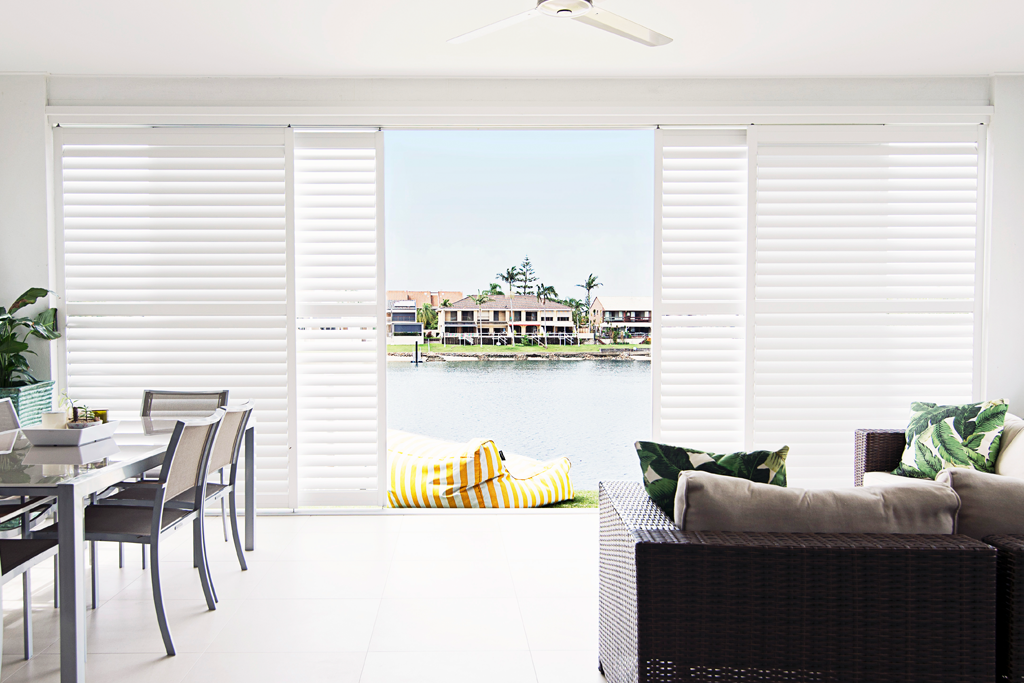
- Sliding doors and wide openings: track or bi fold styles cover large spans neatly
How to Choose the Right Plantation Shutters for Your Home
The right shutters depend on the room, the window type, and how much sun and moisture the area gets. A good choice should feel easy to use every day and still look right years later.
- Choose PVC for bathrooms and laundries, and timber for a warmer premium look in living areas
- Go larger on louvre size for a cleaner look and more light, smaller if you want tighter privacy control
- Use inside mount for a built-in finish, and outside mount to cover uneven trims or shallow reveals
- Make sure there is clearance for window handles, cranks, security screens, and flyscreens
- Prioritise a tighter fit for west-facing windows to reduce glare and late afternoon heat
- Pick finishes that suit your cleaning needs, especially in kitchens where wipe downs are frequent
- Get accurate measuring to reduce gaps that cause light bleed and drafts
If you are unsure, decide material first based on moisture and sun exposure, then finalise louvre size and mounting. A professional measure helps avoid small fit issues that can bother you every day.
Which is better PVC or Timber in Australia?
| Factor | PVC Shutters | Timber Shutters |
| Best rooms | Bathrooms, laundries, kitchens | Living rooms, bedrooms |
| Moisture/humidity | Excellent (wet-area friendly) | Not ideal in wet areas unless specially treated |
| Look | Clean, crisp, consistent | Warm, premium, natural |
| Maintenance | Wipe-and-go | Dust + gentler cleaning |
| Stability | Very stable in humidity | Can expand/contract with humidity |
| Cost (typical) | Often mid-range | Often mid–high |
Quick Room-By-Room Recommendation
- Bathrooms / Laundries: PVC
- Kitchens: PVC (usually) unless your kitchen is very dry + you want timber aesthetics
- Bedrooms: Timber (warm look) or PVC if you want easy-clean and a crisp white finish
- Living rooms: Timber for premium look; PVC if sun + maintenance is the priority
- Coastal / humid homes: PVC (or a moisture-rated composite if you offer it)
Costly Mistakes to Avoid When Buying Plantation Shutters
- Choosing timber in wet areas like bathrooms or laundries
- Selecting the wrong mount and leaving light gaps at the edges
- Forgetting handles, cranks, locks, or flyscreens and causing clashes
- Focusing on price only and ending up with loose louvres or warping
- Picking a louvre size that looks out of place for the window
- Ignoring west facing sun and struggling with heat and glare later
- Skipping a proper measure and getting an uneven fit or light bleed
Get a Free Measure and Quote for Plantation Shutters in Australia
If you’re considering plantation shutters, the easiest way to get the right result is to match the style and material to your windows and rooms. At All Shutters & Blinds, you can explore shutter options, see what suits wet areas versus living spaces, and get clear guidance on louvre sizes and finishes without the guesswork.
When you’re ready, visit our website to request a free measure and quote. We’ll help you choose a setup that fits properly, looks clean, and works for your day to day needs, from privacy to glare control.
FAQs
Are plantation shutters worth it?
Yes, if you want long term light control, privacy, and a built-in look. They usually last longer than many fabric window coverings, so the value often comes over time.
Do shutters help with heat?
They can help by blocking direct sun and adding an extra layer at the window. A tight fit matters most for reducing heat and glare, especially on west-facing windows.
Which is better, PVC or timber?
PVC is usually better for bathrooms, laundries, and humid areas because it handles moisture well. Timber suits living rooms and bedrooms when you want a warmer, more natural finish.
Are they easy to clean?
Yes. Most need regular dusting and an occasional wipe with a damp cloth. There is no fabric to wash, which makes upkeep simpler.
Do plantation shutters block light fully?
They can darken a room well, but small light gaps are normal around frames and louvres. If you want maximum darkness, ask for a tighter fit and the right frame style for bedrooms.
Can shutters go on sliding doors?
Yes, with the right configuration, such as track-mounted panels or bi-fold styles. The best option depends on how often you use the door and how much clearance you have.